October 1, 2026
From ancient traditions to AI-driven culinary innovation, plant-based has come a long way. This World Vegetarian Day, on October 1st, we look at 26 standouts from the movement and the role pulses play going mainstream, from everyday eating to next-generation foods.

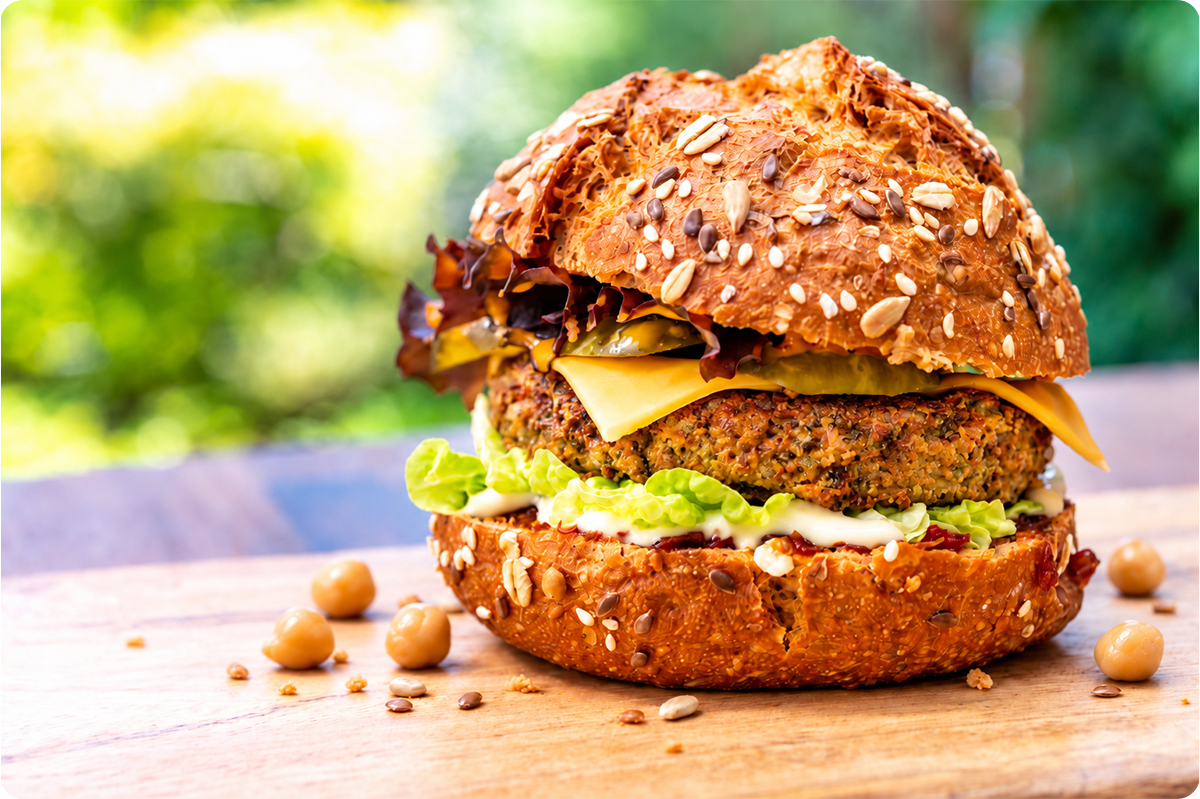
The global plant-based protein market is estimated at $25.3 billion in 2026, while the pulse protein sector has reached $11.5 billion.
World Vegetarian Day is observed worldwide and was established on October 1st, 1977, by the North American Vegetarian Society (NAVS). In 1978, it was endorsed by the International Vegetarian Union (IVU) to promote awareness on plant-based eating.
October 1st serves as the kick-off for Vegetarian Awareness Month, a 31-day cycle that builds steady consumer engagement around going meat-free until it reaches World Vegan Day on November 1st.
Before the word "vegetarian" was coined in the 19th century, people following a meatless diet were commonly referred to as "Pythagorean", according to the Oxford English Dictionary: the ancient Greek mathematician Pythagoras abstained from meat due to his philosophical beliefs.
A macroeconomic study published via EconStor, analyzing household budget surveys from around the world, found that an estimated 1.5 billion people follow a vegetarian diet. However, drivers vary: while some markets lean toward active ethical or health choices, other regions adhere to it due to cultural traditions or economic necessity.
India has one of the highest percentages of vegetarians in the world, with around 39% of its total population abstaining from meat. This deep-rooted preference is largely tied to ancient traditions in Hinduism, Buddhism, and Jainism.
A core dietary difference between vegetarians and vegans lies in animal derivatives. Vegetarians generally exclude meat, poultry, and seafood but may continue to eat dairy, eggs, or honey. Vegans strictly exclude all animal-derived foods and by-products.
Vegetarianism is typically treated as a dietary choice centered on food consumption. Veganism explicitly extends beyond the plate into a broader philosophy that rejects animal exploitation entirely, meaning vegans also avoid leather, wool, silk, and cosmetics tested on animals.
The term "vegan" was coined in 1944 by a group of members who broke away from the Leicester Vegetarian Society in the UK. They created the word by simply taking the first three and last two letters of "vegetarian".
"Flexitarians" are consumers who actively choose to cut down on animal products without eliminating them completely. They represent a massive bridge demographic: one in four consumers identifies as flexitarian, according to a global survey by Insites Consulting.
Bloomberg Intelligence projects that global plant-based food revenue could reach $162 billion by 2030, driven by shifts in consumer preferences and food production.

1.5 billion vegetarians and counting. Young consumers are driving the shift in eating habits, with flexible diets gaining ground alongside vegetarian and vegan choices.
A global market report published in August 2026 by Fortune Business Insights found that the meat substitutes market has firmly established itself in mainstream supply chains, valued at $8.63 billion. Fueled by widespread flexitarian demand, this sector is projected to more than double to over $20.7 billion by 2034.
Younger generations are playing an increasingly important role in plant-based consumer trends. Statista data indicates that roughly 1 in 10 U.S. adults born after 1980 (Millennials and Gen Z) identify as vegetarian or vegan, compared with just 1 to 2 in every 100 Baby Boomers.
Food innovation trends show that major multinational companies are increasingly bypassing the "vegetarian step" altogether. New plant-based products are formulated to meet strict vegan standards, allowing manufacturers to appeal to the entire plant-based consumer base.
A significant driver of the green economic boom isn't just full meal replacements, but convenient plant-based snacks. Brands are leveraging alt-proteins, botanicals, and clean-label ingredients to meet growing consumer demand.
Livestock farming and feed cultivation currently use around three-quarters of all agricultural land globally. Shifting diets toward plant-based foods could reduce pressure on land, deforestation, and biodiversity.
Converting land crops directly into human food is dramatically more resource-efficient. Research compiled by the UN FAO and Our World in Data shows that it requires roughly 14.5 kilograms of grain to yield just 1 kilogram of beef, meaning a societal shift toward plant eating frees up tremendous agricultural capacity.
Global food security models —such as research from the University of Minnesota’s Institute on the Environment— suggest that the planet could feed an additional 4 billion people if crops were grown directly for human consumption rather than being funneled through livestock feedlots.
Clinical data published in JAMA Network Open found that a low-fat plant-based diet can increase human metabolism, improving the post-meal metabolic spike. The study showed that calorie burning increased by 14% after eating plant-based food.
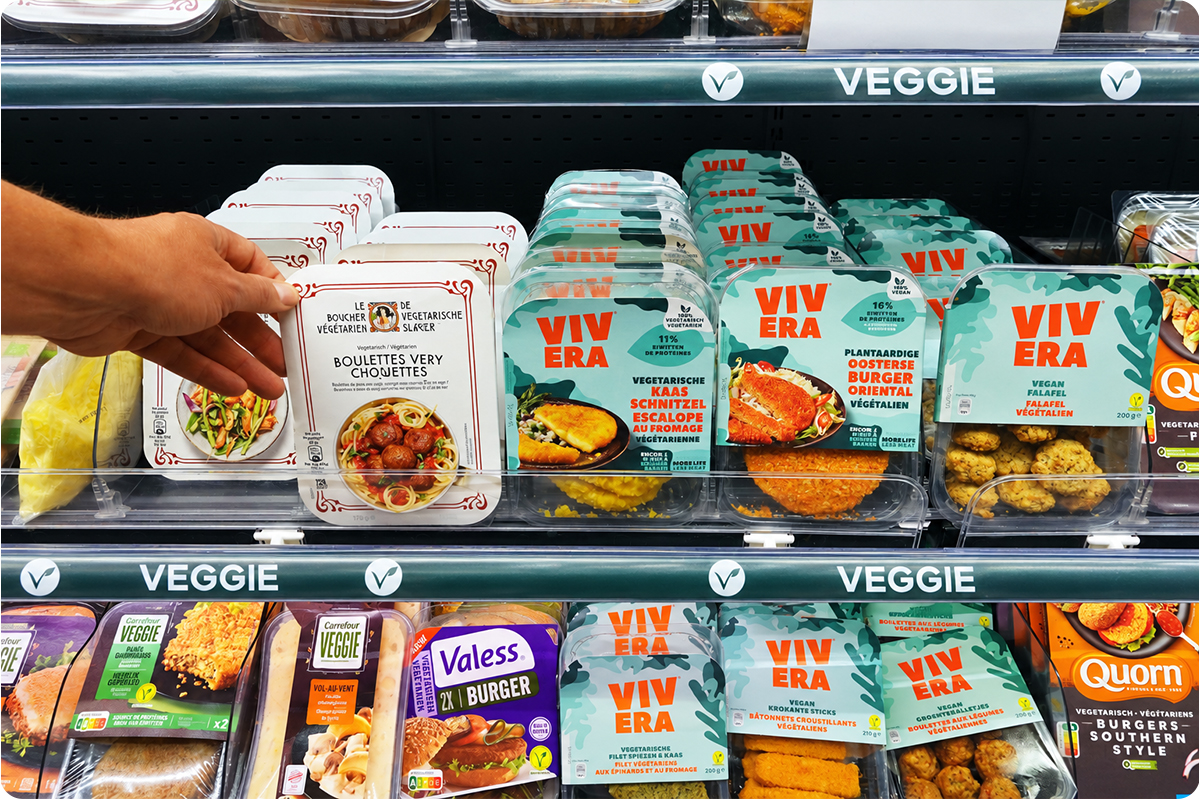
The global plant-based protein market is estimated at $25.3 billion in 2026, while the pulse protein sector has reached $11.5 billion.
Massive health studies reveal that individuals adhering to well-balanced vegetarian diets have a 25% lower risk of dying from heart disease, a significant reduction in cardiac mortality and societal healthcare expenditures.
Driven by the trends celebrated on World Vegetarian Day, the global plant-based protein market is estimated at $25.3 billion in 2026, according to data from SNS Insider.
Nestled within this ecosystem, the pulse protein sector reached an outstanding value of $11.5 billion, with an expected 8.6% compound growth rate.
While pea protein continues to hold a dominant 40% share of the pulse market according to Persistence Market Research, food labs have experienced a massive commercialization pivot toward faba bean and chickpea protein isolates. This allows manufacturers to formulate completely soy-free, gluten-free, and clean-label allergen alternatives.
India remains the global titan, consuming over 45% of the world's total pulse supply due to its rich culinary traditions and primarily vegetarian demographics. However, on an intensive per capita basis, nations like Niger and Tanzania lead the daily dietary intake charts from Statista, while the UAE stands out at more than 219 kcal per capita per day from pulses, with lentils, beans, dry peas and chickpeas — including in hummus — featuring prominently in the local diet.
One of the biggest breakthroughs in recent food technology is the deployment of AI-enabled flavouromics platforms, championed by organizations like Pulse Canada. These AI models map the precise chemical composition of pulses during storage to systematically predict, isolate, and address natural "off-flavors" or bitter botanical notes before they ever reach consumer products.
Pulse proteins are becoming "functional structural frameworks" — and have graduated from being mere "nutritional add-ins". Industry reporting by The Food Tech
highlights that lab formulations utilizing advanced enzymatic processing and membrane fractionation now use pulses as the primary functional tool for industrial emulsification, texturizing, aeration, and thermal stability, meaning clean-label bean and pea isolates can now replace synthetic stabilizers.
The pulses market is rapidly moving away from raw, low-margin bulk commodity shipping toward highly advanced ingredient manufacturing. B2B investments, such as the multi-million dollar venture backing from Protein Industries Canada with AGT Foods, are funding fractionation and wet-extrusion facilities that convert simple peas and faba beans directly into highly specialized baking mixes, ready-to-drink nutrition shakes, 3D-printed structured whole-cut meats — and the very matrix of tomorrow’s sustainable food supply.

World Vegetarian Day 2026 / plant-based eating / vegetarianism / flexitarian diets / food innovation / pulse proteins.


Disclaimer: The opinions or views expressed in this publication are those of the authors or quoted persons. They do not purport to reflect the opinions or views of the Global Pulse Confederation or its members.